Independent field note
Planning a visit to the Gardens of La Ballue
La Ballue is a composed garden visit rather than a quick château stop: allow its clipped forms, perspectives and landscape setting to set the pace.
Find the place
Address and maps
Château and Gardens of La Ballue
The garden advises entering the locality La Ballue in a satnav; signs point to the château from nearby roads.
Visit for the gardens, not an assumed castle tour
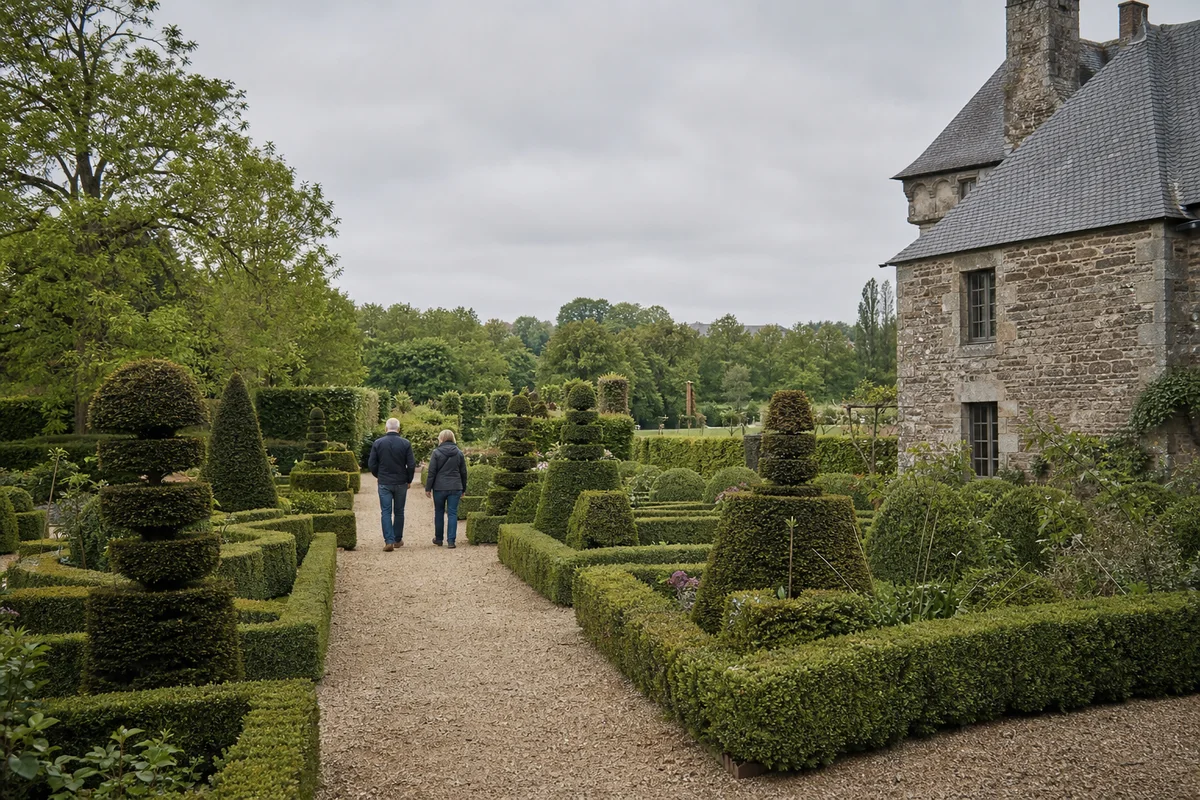
La Ballue sits in the countryside near Bazouges-la-Pérouse, with a château and gardens looking across the Couesnon landscape. The gardens are recognised under France’s Jardin Remarquable label and are known for formal structure, clipped topiary, controlled perspectives and more labyrinthine spaces.
The distinction between property and visit matters. The normal visitor experience centres on the gardens and exterior setting; access to château interiors should never be assumed. The official site explains what is included and announces any exceptional programme.
Check the live visitor information first
La Ballue is privately operated, seasonal and ticketed. Use the official English website to confirm opening dates, admission, booking and current events. Do not rely on hours or prices copied into an old article, including this one.
The official frequently asked questions cover practical matters such as the scope of the visit, accessibility and arrival. Read them when a step-free route, group visit or particular facility determines whether the outing will work. Contact the garden directly about needs that the published information does not settle.
Slow down enough to see the design
A formal garden is best read through movement. Notice where a hedge closes the view, where an opening frames the countryside and how a change in height alters the château’s relationship with the planting. Repeating shapes may look simple from one position and unexpectedly complex from another.
Season also changes the experience. Structure can dominate at one point in the year; flowers, foliage or weather may take attention at another. Arrive without trying to reproduce a promotional photograph. The garden in front of you is the relevant version.
Make the visit comfortable
Choose shoes for outdoor paths and the day’s conditions. Carry a layer for exposed viewpoints and allow for rain without assuming that the château provides an indoor fallback. Follow signs around planted areas and do not cross a border for a photograph.
Parts of a historic garden can involve steps, slopes or surfaces that limit access. The official FAQ describes partial wheelchair access and directs visitors to the appropriate route. Confirm the current arrangement before travelling, especially after poor weather or when assistance is required.
Families can enjoy shape, hiding and perspective without turning the garden into a playground. Agree on boundaries, keep children close around drops or water, and follow any on-site rule. Dogs, picnics and other practical questions should also be checked with the property rather than guessed.
Pair La Ballue thoughtfully
Bazouges-la-Pérouse is the natural cultural companion. Its art and heritage walk provides a contrast between a lived town, outdoor contemporary works and a designed private garden. Keep the two visits separate enough that a delayed arrival or longer garden circuit does not spoil the second.
Avoid adding a long Villecartier walk simply because the places appear close on a map. A garden visit, a measured walk through Bazouges and a meal confirmed in advance make a more credible day than three rushed headline attractions.
Before travelling
- confirm the garden’s current opening dates and admission arrangements;
- check what the ticket covers and whether an event changes normal access;
- read the official accessibility information for your group’s needs;
- plan rural transport and the final approach before departure;
- check any restaurant or onward attraction separately.