Independent field note
Walking Villecartier’s Small Monuments Trail
This forest circuit rewards slow observation: trees, old route markers and modest memorials reveal how people have travelled through and worked in Villecartier.
Find the place
Address and maps
Official start — Récrénature car park
The official route sheet places the start at the Récrénature car park and publishes these GPS coordinates. Download the current PDF or GPX as well.
A trail where small details carry the story
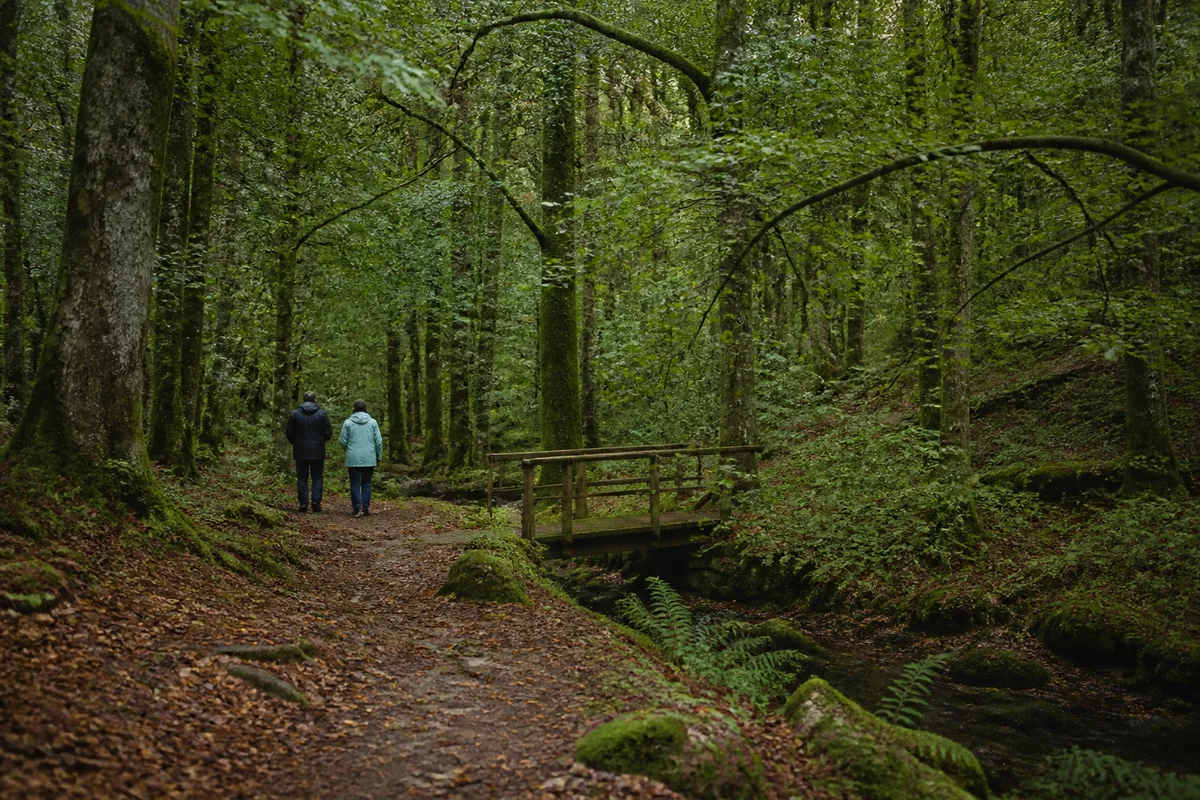
Villecartier is easy to treat as a green backdrop. The Small Monuments Trail asks for a different pace. Its points of interest are not grand buildings placed in a neat visitor precinct; they are markers encountered along forest tracks, meaningful because of their relationship with old routes, woodland work and local memory.
The official itinerary names remarkable trees, a milestone, the Saint-Mathurin oratory, the Sainte-Anne cross, a trough associated with clog makers and a column recalling the Chouans. Use those names as prompts to look carefully, not as a checklist to rush through. Surfaces, signs and vegetation can determine what is obvious on the day.
Begin with the current map
Open the tourist office’s Small Monuments Trail page before travelling. It is the right place to obtain the current route description and downloadable map. The French route page provides the same official starting point if the English material is unavailable.
Do not navigate from a list of monuments alone. Forestry work can alter sightlines or make a waymark less visible, and the official page may carry a temporary warning. Download the current map, understand the direction of travel and keep it available offline. If the waymarks and your saved route disagree, return to the last certain point instead of improvising through the forest.
How to read the stops
An oratory or cross rewards a close look at its setting: the approach, nearby path junctions and the way later visitors have maintained it. The milestone belongs to the longer history of movement through the area. The trough points towards woodland crafts and working lives, while the Chouan column introduces a more political layer of local memory.
The route page gives the identifications; it does not require you to invent a dramatic story around each object. Photograph the label where present, note questions, and consult the linked official material later. This is more reliable than repeating an unattributed anecdote from an old travel post.
Prepare for an ordinary forest, not a city park
Wear footwear that can cope with roots, mud and loose material. Carry water, a charged phone and a simple first-aid kit, but do not rely on a phone signal as your only navigation. In wet or windy conditions, reassess the outing before entering the trees.
Villecartier is managed woodland. Forestry operations, hunting arrangements and storm damage can affect access. Read current local notices, obey barriers and signs, and turn back when conditions differ from the plan. An open parking area is not evidence that every path is open.
Make a satisfying day without overloading it
Let the walk be the main event. A calm stop near the Récrénature lake can work before or afterwards, but a booked activity on the same day adds another timetable and set of conditions. If you want the miniature port or treetop course, check those separately and leave enough time for the forest route.
Bazouges-la-Pérouse makes a sensible alternative in poor woodland conditions. Its heritage and outdoor art can be explored in shorter sections, with the option to stop when the weather deteriorates. See the Bazouges walking guide for that plan.
Check before setting out
- download the latest official route map and read any temporary warning;
- check weather, forestry work, hunting information and closures;
- carry offline navigation and enough daylight for an unhurried return;
- keep dogs under the control required by current signs and forest rules;
- take litter away and leave monuments, plants and dead wood undisturbed.